
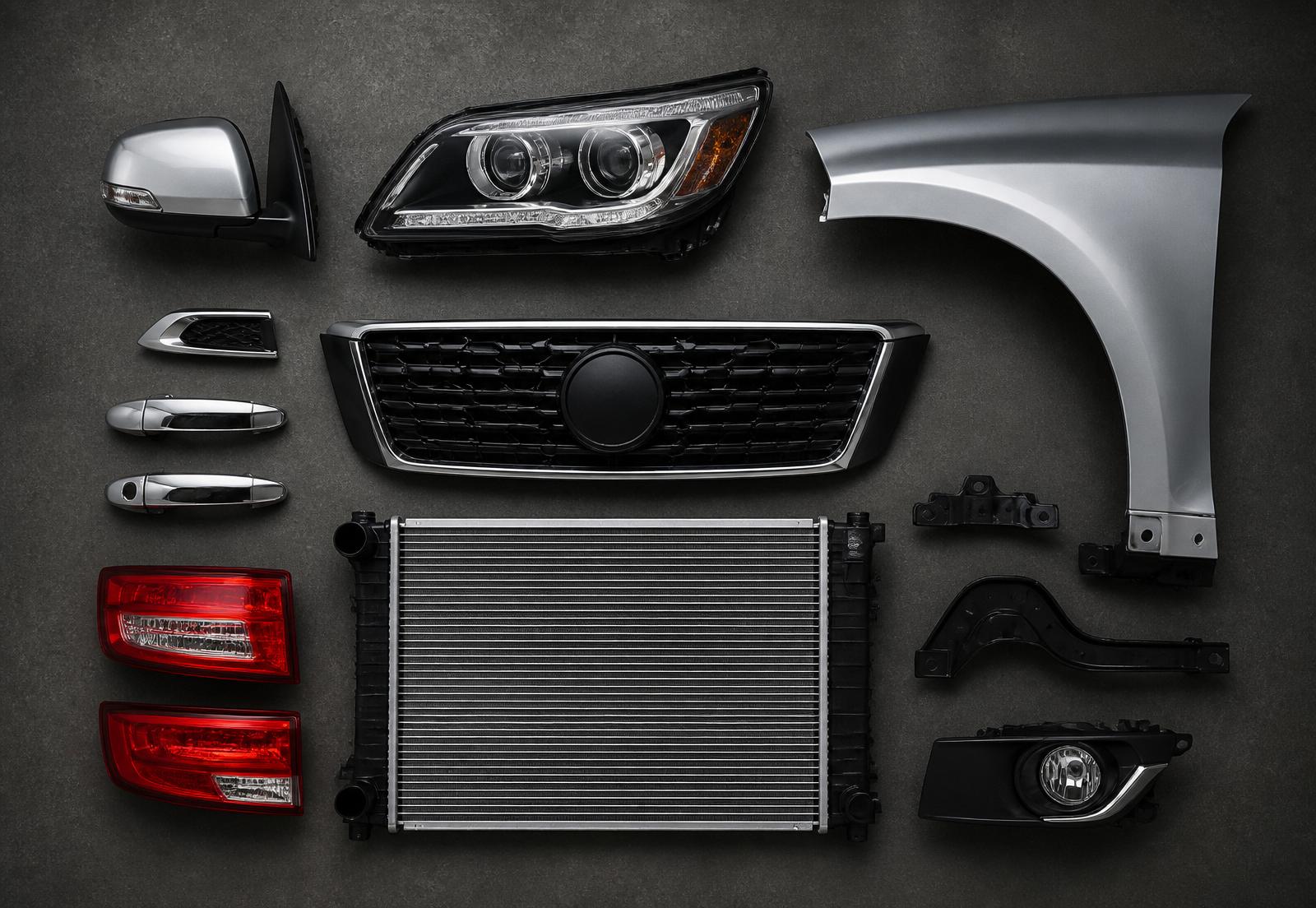
Absorbers that give the fascia something intelligent to compress against.
The foam or honeycomb absorber sits between fascia and rebar, converting low-speed impact into deformation instead of frame stress. Density and shape are both spec-critical.
Bumper System · Energy Management · Ships from Warren, MI
Aftermarket notice: This is a quality aftermarket replacement part — not an OEM component sold by the vehicle manufacturer.
Backed by the Power Auto Parts fit & finish warranty.
Absorber inventory design
Absorbers aren't just foam blocks — they're calibrated crush structures with specified density profiles. We stock OE-equivalent absorbers so the fascia sits correctly and low-speed collision behavior matches the vehicle's certification.
When absorbers get replaced
Any collision requiring fascia replacement
If the cover came off, inspect the absorber. Compressed EPP does not spring back.
Prior repair with missing absorber
Some quick fixes leave the absorber out entirely — reinstall for correct low-speed protection.
Weather-degraded absorbers
Long UV exposure through a torn fascia can degrade the foam.
Signs the absorber is done
Foam remembers everything:
- Visible compression, folding, or dimpling in the foam
- Missing sections where the absorber has torn
- Loose fit against the rebar after fascia reinstall
- Yellowing or brittleness in EPP surfaces
Why absorbers come off
- 1Collision compression rendering the foam ineffective
- 2Prior repair without absorber reinstall
- 3UV exposure degrading foam integrity
- 4Fascia upgrade requiring matched absorber geometry
Absorber material types
Expanded polypropylene (EPP)
The industry standard — molded to specific density profiles for the vehicle.
Honeycomb polymer
Structured crush pattern used on higher-speed rated bumpers.
Steel plate reinforcement (integrated)
Some absorbers include a thin steel plate for load spreading.
Absorber ordering notes
Always replace with fascia work
Reusing a compressed absorber is a quiet insurance liability.
Match density, not just shape
Two visually identical absorbers can have different density — order OE-spec.
Inspect the fascia clips
Absorber install often exposes cracked or loose fascia clip channels. Replace as needed.
Absorber FAQs
- Can I reuse an absorber after a minor bump?
- If the fascia deformed, assume the absorber compressed. Replacement is the safe call.
- Do your absorbers meet FMVSS 581?
- We stock absorbers that meet or exceed the applicable low-speed impact standards for their vehicles.
- Are absorbers packaged with fasteners?
- Absorbers themselves rarely require fasteners — they seat between rebar and fascia and are retained by the cover.
Rebuild the bumper stack the way it left the factory.
Talk to a specialist about the specific fascia and rebar combination, and we'll match the correct absorber.