
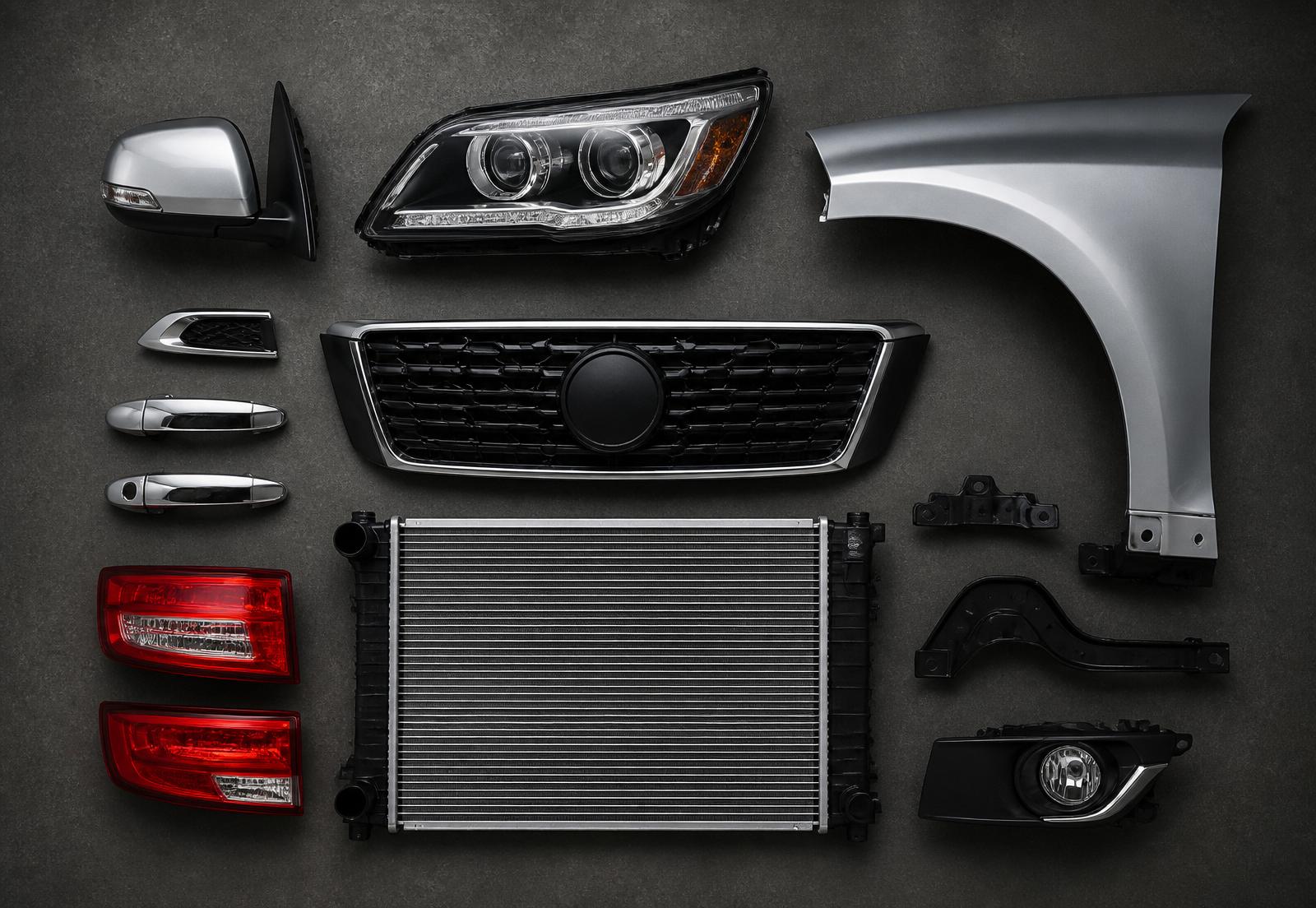
Reinforcement bars that put the crash structure back the way the engineers designed it.
The rebar sits behind the fascia doing the real work of any impact. Get the geometry and material grade wrong and everything downstream absorbs energy differently.
Structural · Bumper System · Ships from Warren, MI
Aftermarket notice: This is a quality aftermarket replacement part — not an OEM component sold by the vehicle manufacturer.
Backed by the Power Auto Parts fit & finish warranty.
Our reinforcement bar coverage
We stock rebars in the profiles the vehicle came with — stamped steel, roll-formed high-strength, extruded aluminum — with the mounting brackets and crush cans matched to OE bolt pattern. This is where 'looks-close' saves nothing.
When a reinforcement bar has to be replaced
Any measurable collision impact
OEMs specify replacement even for cosmetic bumper hits when the rebar has taken load.
Crush-can activation
If the collapsible sections have deformed, the assembly is at end of life.
Corrosion at the mount points
Salt-belt vehicles lose section thickness where the bracket meets the frame rail.
Visual and inspection signs
Rebars often look worse than they measure — measure anyway:
- Visible bowing, kinking, or twist across the beam
- Crush cans partially or fully collapsed
- Cracked welds at the bracket-to-beam junction
- Corrosion perforation on the bumper mounting flange
Why rebars get replaced
- 1Front or rear collision impact (OEM-mandated replace)
- 2Corrosion at the frame-mount bracket
- 3Post-tow-hitch damage from improper mounting
- 4Trim upgrade with new fascia requiring matched rebar
Bar materials and profiles
Stamped mild steel
Cost-effective replacement for economy and mid-market vehicles.
Roll-formed high-strength steel
Higher yield strength and thinner section for weight optimization.
Extruded aluminum
Common on luxury vehicles and half-ton pickups for weight.
Ordering rebars without guesswork
Order the crush cans as a set
If the impact reached the rebar, the crush cans have absorbed load and need replacement.
Confirm sensor brackets
Adaptive-cruise and park-assist rely on brackets welded to specific rebar variants.
Refer to OEM position statements
Some manufacturers require replacement rather than repair. Check before quoting a straighten job.
Reinforcement bar FAQs
- Can a reinforcement bar be straightened?
- OEM position statements typically prohibit straightening on high-strength steel and aluminum bars. Replacement is the standard.
- Do your bars come with mounting hardware?
- Yes. Brackets and crush cans are packaged with the bar where the OE integrates them.
- Do you carry aluminum rebars for late-model half-tons?
- Yes, for the models that came factory-aluminum. Handled and shipped isolated from steel to prevent galvanic issues.
Put the crash structure back in one call.
VIN, front or rear, and any tow or ADAS notes — we'll route a rebar and matching crush cans on the next lane.