
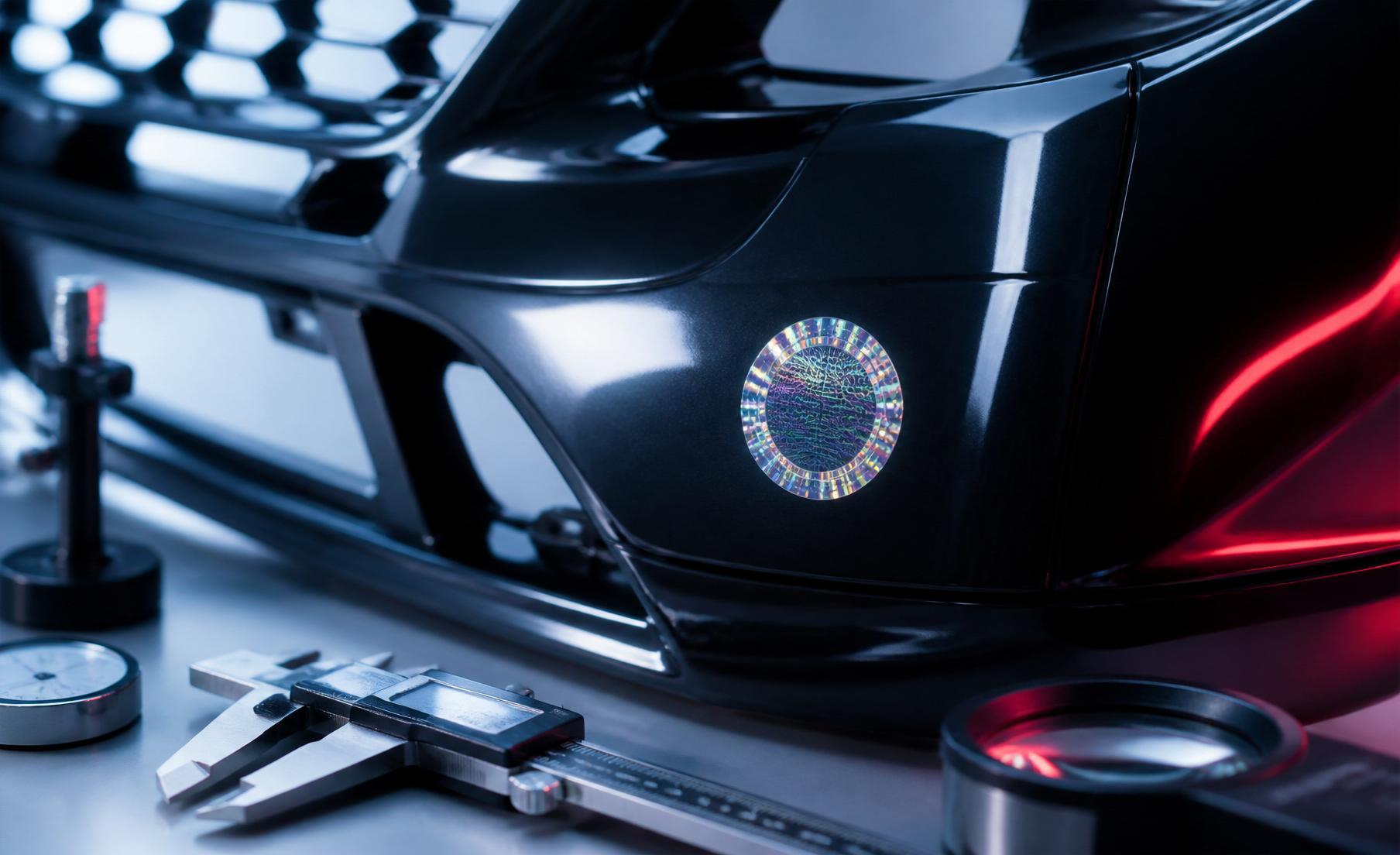
CAPA Certified Aftermarket Auto Body Parts
Power Auto Parts distributes CAPA Certified aftermarket replacement components to collision repair shops, insurance repair networks, dealerships, fleets, and vehicle owners across Michigan, Ohio, and Indiana. Every certified part in our catalog is independently tested for fit, finish, and material quality so the repair leaves the shop the way the vehicle left the factory.
A published quality standard for aftermarket collision parts
CAPA is the Certified Automotive Parts Association, a non-profit standards body founded in 1987 to give the collision repair industry an independent way to verify aftermarket part quality. Before CAPA existed, shops and insurers had no objective way to compare one aftermarket bumper cover or headlight to another. Marketing claims filled that gap, and quality varied wildly from one shipment to the next.
CAPA does not manufacture parts. It develops written test standards, contracts with independent laboratories, and audits factories on an ongoing basis. A component only earns the CAPA seal after it passes documented tests for dimensional accuracy, material composition, corrosion resistance, and structural performance. Parts that fail are rejected, and factories that slip out of compliance lose their certification.
For repair professionals, that translates into predictability. When a technician opens a CAPA Certified box, the mounting holes line up, the panel gaps look right, and the finish accepts paint the way the estimator planned for. For vehicle owners, it means a repair that holds up over time rather than a bargain part that has to come back off the car six months later.
Why the seal matters
- Independent laboratory testing with no ties to the part manufacturer.
- Ongoing factory audits, not a one-time pass at launch.
- Public database of certified parts with unique serial numbers.
- Accepted by many major insurance carriers on qualifying claims.
- A documented alternative to unverified imported components.
What the CAPA seal actually delivers
Certification is not a marketing sticker. It is a repeatable, published process that touches every step from raw material to finished shelf part.
Independently tested
Every certified part is validated by an independent third-party laboratory that has no financial stake in the manufacturer, the distributor, or the shop installing it.
Fit & finish standards
Panel gaps, mounting hole placement, and edge alignment are measured against strict CAPA criteria so the part drops into the vehicle the way a technician expects.
Material quality
Steel gauge, plastic composition, coating thickness, and lens clarity are all held to documented specifications rather than left to a factory's discretion.
Dimensional accuracy
CAPA testing verifies every critical dimension against the vehicle's original geometry so the part supports proper structural repair and paint work.
Consistent manufacturing
Certified factories are audited on an ongoing basis, which keeps the twentieth part in a run built to the same standard as the first.
Cost-effective alternative
CAPA parts give shops and vehicle owners a documented quality option that typically comes in below OEM pricing without the guesswork of uncertified imports.
Broad vehicle coverage
The CAPA catalog spans domestic, European, and Asian nameplates across model years that most collision facilities repair every week.
Traceable certification
Each certified component ships with a yellow-and-blue CAPA seal and unique serial number, making verification easy for insurers and quality auditors.
Certified components stocked for daily collision repair
These are the CAPA-eligible categories body shops call about most often. Availability by year, make, and model varies, and our team confirms every certified part before the order ships.
Bumpers
Absorb low-speed impacts and carry the vehicle's front and rear styling.
When replaced: Replaced after collision damage, cracked skins, or failed impact absorbers.
Front Bumper Covers
Cosmetic outer skin of the front bumper assembly.
When replaced: Swapped when cracked, torn at the mounting tabs, or heavily scuffed.
Rear Bumper Covers
Rear cosmetic bumper skin housing sensors, exhaust cutouts, and reflectors.
When replaced: Replaced after parking-lot hits or tailgate-area damage.
Hoods
Structural panel that shields the engine bay and shapes the front of the vehicle.
When replaced: Replaced after front-end collisions, hail damage, or corrosion.
Fenders
Cover the front wheel wells and tie the hood, door, and bumper together.
When replaced: Swapped after side-swipe damage, deep dents, or rust perforation.
Headlights
Provide forward lighting and integrate DRLs, turn signals, and sensors.
When replaced: Replaced when lenses crack, housings yellow beyond restoration, or mounts break.
Taillights
Handle brake, turn, reverse, and marker functions at the rear of the vehicle.
When replaced: Replaced after rear impacts, cracked lenses, or moisture intrusion.
Mirrors
Exterior mirrors with glass, housings, and often signal lamps or blind-spot modules.
When replaced: Replaced after side hits, broken housings, or motor failure.
Grilles
Cover the radiator opening and carry a large share of the vehicle's design language.
When replaced: Replaced after front collisions, cracked slats, or trim damage.
Radiators
Cool engine coolant as air moves through the core.
When replaced: Replaced after front-end impact, leaks, or fin damage.
Condensers
Release heat from the air-conditioning refrigerant loop.
When replaced: Replaced when bent by debris, punctured in a collision, or leaking.
Cooling Fans
Pull air through the radiator and condenser during low-speed driving.
When replaced: Replaced after motor failure, cracked shrouds, or collision damage.
Radiator Supports
Structural core that ties the front end together and mounts cooling components.
When replaced: Replaced after moderate front collisions or heavy corrosion.
Fender Liners
Line the wheel well to shield the engine bay from water, salt, and debris.
When replaced: Replaced when torn, brittle, or missing after a collision or curb strike.
Reinforcement Bars
Steel or aluminum beam that manages crash energy behind the bumper cover.
When replaced: Replaced after any collision that deforms the bar or absorbers.
Fog Lamps
Low-mounted auxiliary lighting for poor-visibility driving.
When replaced: Replaced after front-end damage or lens cracks.
Marker Lights
Side and corner lights that make the vehicle visible from the side.
When replaced: Replaced when lenses crack or housings pull loose after a hit.
Signal Lamps
Dedicated turn-signal and park-lamp assemblies.
When replaced: Replaced after collisions or when the assembly loses its watertight seal.
Washer Bottles
Hold windshield washer fluid and feed the pump and nozzles.
When replaced: Replaced after cracks, mounting damage, or pump failure.
Hood Hinges
Pivot the hood open and closed and keep it aligned to the fenders.
When replaced: Replaced when bent in a collision or when the hood no longer sits flush.
Rocker Panels
Structural panels running below the doors along the vehicle's sides.
When replaced: Replaced after curb damage, rust-through, or lower-body collisions.
License Plate Brackets
Front and rear brackets that mount plates without drilling into painted panels.
When replaced: Replaced after bumper work or when the original bracket breaks.
Front Valances
Lower air dam beneath the front bumper that manages airflow and styling.
When replaced: Replaced after curb strikes, road-debris damage, or full front-end repair.
Engine Under Covers
Belly pans that protect the engine bay and improve aerodynamics.
When replaced: Replaced when torn loose by debris, dragged on curbs, or damaged in a collision.
Splash Shields
Panels that keep water, salt, and gravel out of critical underbody areas.
When replaced: Replaced when torn, missing fasteners, or damaged during a collision.
Built for the people writing, approving, and installing the repair
Collision repair shops
Body shops choose CAPA parts when a customer, insurer, or shop policy requires documented aftermarket quality rather than an uncertified alternative.
Insurance-related repairs
Many insurance carriers specify CAPA components on qualifying claims because the certification gives adjusters a written standard to point to.
Fleet maintenance
Delivery, service, and municipal fleets rely on CAPA parts to keep vehicles in rotation without paying dealer pricing on every fender bender.
Commercial repair facilities
Dealership body shops, MSO locations, and independent commercial repairers use CAPA to standardize quality across estimators and technicians.
Individual vehicle owners
Owners paying out of pocket ask for CAPA parts when they want a documented quality tier without the sticker shock of factory OEM.
CAPA questions from shops, insurers, and vehicle owners
What is CAPA?
CAPA stands for the Certified Automotive Parts Association, a non-profit organization founded in 1987 that develops and administers a testing and inspection program for aftermarket collision replacement parts. CAPA does not build parts. It sets standards and verifies that parts submitted by manufacturers actually meet them.
Are CAPA parts aftermarket?
Yes. Every CAPA Certified part is an aftermarket replacement part, not an OEM part. Certification is what separates it from an uncertified aftermarket component. The part is still produced independently of the vehicle's original manufacturer.
Are CAPA parts tested?
Yes. CAPA parts are evaluated by independent third-party laboratories against published specifications covering dimensions, materials, corrosion resistance, and structural performance. Only parts that pass are allowed to carry the CAPA seal.
Do CAPA parts fit like OEM?
CAPA certification specifically targets fit, finish, and function so the part installs to the vehicle's original geometry. In practical terms this means panel gaps, mounting points, and body lines are validated against the original design rather than eyeballed at the factory.
Are CAPA parts accepted by insurance companies?
Many major insurance carriers accept, and in some cases require, CAPA Certified parts on qualifying claims. Because CAPA maintains a public database of certified components, adjusters can verify a part number rather than relying on marketing claims.
Which parts are available as CAPA?
CAPA certification is most common on exterior collision components: bumper covers, hoods, fenders, headlights, taillights, mirrors, grilles, radiators, condensers, cooling fans, radiator supports, reinforcement bars, fender liners, and similar body and lighting parts.
Are CAPA parts less expensive than OEM?
In most cases, yes. CAPA parts typically cost less than the equivalent OEM component while giving the shop and vehicle owner a documented quality standard. Exact savings vary by part, vehicle, and current pricing.
Can I request CAPA parts?
Yes. Vehicle owners can ask their body shop or insurer to specify CAPA Certified components on the repair estimate. Shops and insurance professionals can also request CAPA parts directly when placing an order with Power Auto Parts.
Are CAPA parts painted?
CAPA parts are supplied unpainted or with a factory prime coat, the same way OEM replacement panels arrive. The body shop then prepares and paints the part to match the vehicle's finish during the repair.
Are CAPA parts warrantied?
CAPA parts carry a warranty backed by the distributor and, in most cases, an additional performance guarantee tied to the CAPA program. Power Auto Parts stands behind every certified part we ship with a straightforward fit and finish warranty.
How can I tell a CAPA part from an uncertified one?
Every CAPA Certified part carries a yellow-and-blue CAPA seal with a unique serial number that can be looked up in the CAPA database. If the seal or number is missing, the part is not CAPA Certified regardless of how the seller describes it.
Do CAPA parts affect my vehicle warranty?
Federal law prevents automakers from voiding a factory warranty simply because an aftermarket part was installed. CAPA certification adds another layer of documentation showing the part met a defined quality standard at the time of the repair.
Shop by manufacturer
CAPA availability varies by make and model. Start with your vehicle line and our team confirms certified coverage.
Popular certified categories
Certified aftermarket parts, dispatched from our Michigan warehouse
Call our team at 586-806-2110 or send your parts list and we will confirm CAPA availability, pricing, and delivery for your Michigan, Ohio, or Indiana location.