
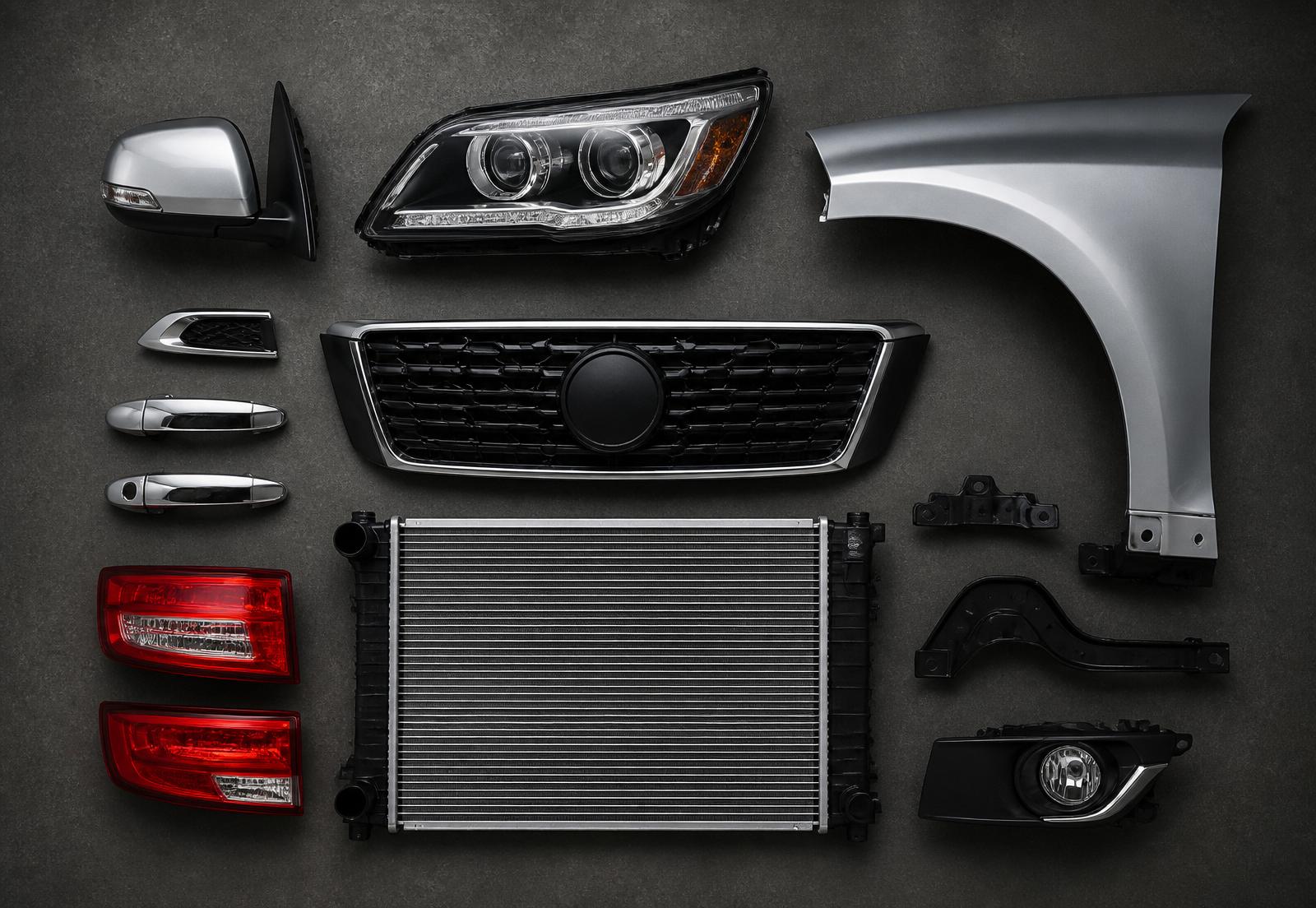
Condensers that pull cabin heat out of the vehicle exactly like the OE unit did.
A condenser has to reject cabin BTUs across a fan-forced airflow. Ours are built to the correct fin density and tube geometry so system pressures land where the compressor expects them.
HVAC · Cooling · Ships from Warren, MI
Aftermarket notice: This is a quality aftermarket replacement part — not an OEM component sold by the vehicle manufacturer.
Backed by the Power Auto Parts fit & finish warranty.
Why condenser selection matters
Not every rectangle of aluminum is a condenser. Fin pitch, tube count, and integrated receiver-drier presence all decide whether the system holds correct pressure and reaches vent temperatures on a 95-degree day. We stock the correct spec, not a shape-alike.
When to replace a condenser
Stone-strike puncture
A single pinhole from freeway debris kills the whole unit.
Collision damage
Front-end impacts fold the condenser between grille and radiator.
System contamination event
When a compressor fails and sends debris downstream, the condenser is contaminated.
Symptoms of a failing condenser
The gauge tells the story, but visual cues help:
- Bent, packed, or missing fins from road debris
- Oily residue visible on the tube surface indicating a leak
- Front-end impact deformation across the face
- Elevated high-side pressures after service
Why condensers get replaced
- 1Physical damage from road debris
- 2Front-end collision impact
- 3Refrigerant leak from tube corrosion
- 4Post-compressor-failure system flush and rebuild
Construction
Aluminum micro-channel tubes
Flat parallel-flow tubes for efficient heat transfer.
Louvered fin banks
Cross-hatched fin geometry that increases surface area within airflow.
Integrated receiver-drier
Combined bottle and desiccant cartridge on select applications.
Spec'ing a condenser correctly
Match refrigerant type
R-134a and R-1234yf systems use different tube pressures. Confirm before ordering.
Replace the drier with the condenser
Whether integrated or separate, the desiccant should be fresh.
Evacuate and hold vacuum
The new condenser deserves a proper vacuum test — 30 minutes minimum before charging.
Condenser questions we hear
- Do your condensers include the drier cartridge?
- For integrated-drier applications, yes — the desiccant is pre-installed and sealed.
- Are the fittings pre-flared?
- The fittings ship in OE geometry and thread pitch. New O-rings should always be used at install.
- Can you support both R-134a and R-1234yf applications?
- Yes. We stock condensers matched to both refrigerant systems across our supported vehicle list.
Parts that often ship together.
Cool cabin, correct pressure, no comebacks.
Call the counter with the VIN and the refrigerant type — we'll route the correct condenser and drier on the next lane.