
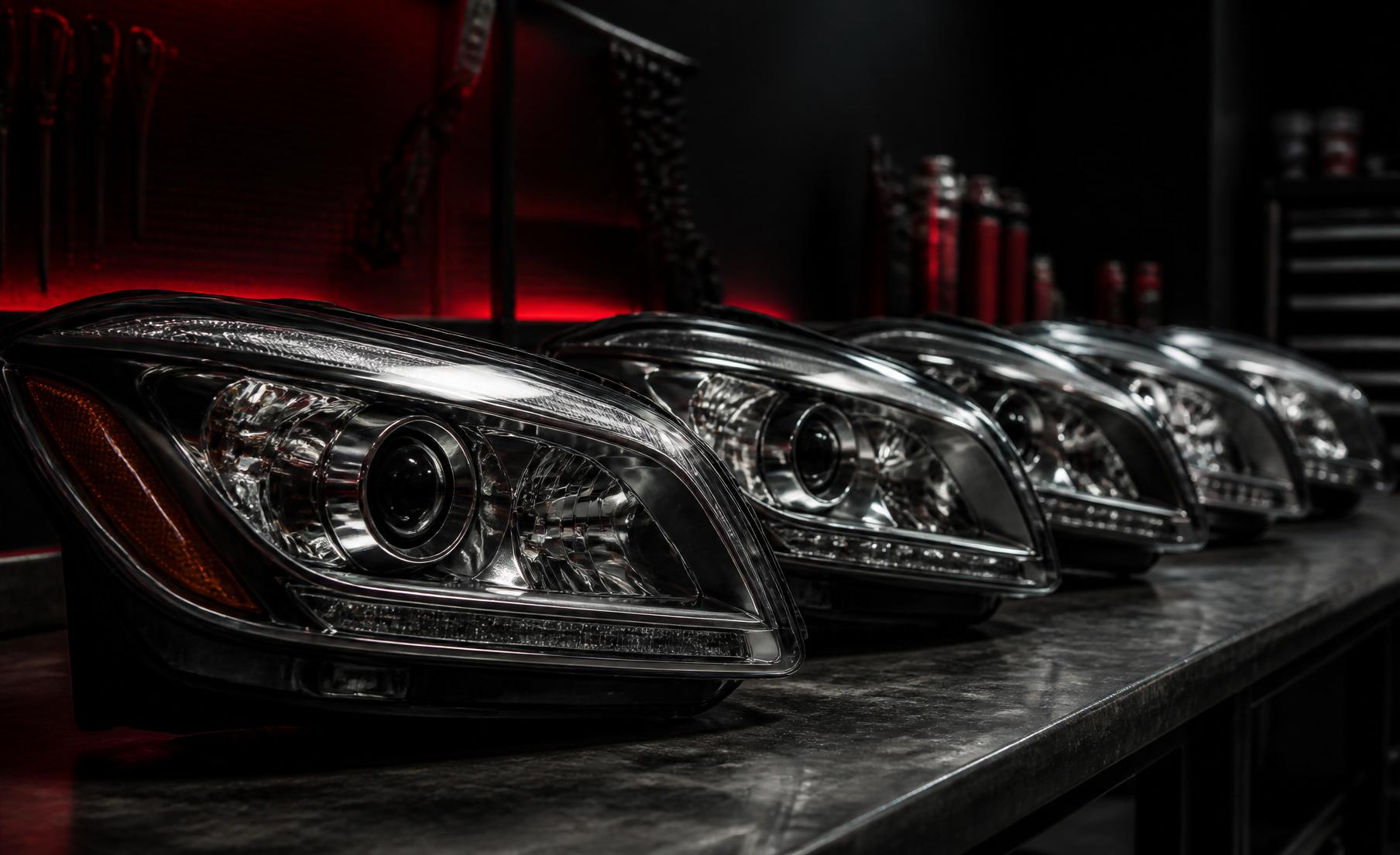
Non-CAPA Aftermarket Auto Body Parts
Non-CAPA parts are the everyday, budget-friendly tier of the aftermarket world. They cover more model years, keep customer-pay estimates realistic, and give body shops a practical answer when a CAPA Certified part is not available or not required. Power Auto Parts stocks non-CAPA components in Warren, Michigan and delivers across Michigan, Ohio, and Indiana.
Aftermarket replacement parts without the CAPA seal
Non-CAPA parts are aftermarket collision components that have not been submitted for, or have not completed, the Certified Automotive Parts Association testing program. That does not mean the part is low quality or unsafe. It means the manufacturer stands behind its own factory quality process without a third-party seal added on top of it.
In practical terms, non-CAPA is where the majority of the aftermarket collision catalog lives. CAPA certification is voluntary and expensive, so many manufacturers only certify their most popular part numbers. Everything else — older model years, low-volume trims, specialty brackets, and cosmetic trim — ships as non-CAPA even when it comes out of the same factory.
Non-CAPA parts are widely used by collision shops, dealership body shops, fleet operators, and individual vehicle owners who need a functional replacement panel or light without paying OEM pricing. When the repair is cosmetic, the vehicle is out of warranty, or the customer is paying the bill, non-CAPA is often the option that makes the repair possible.
Where non-CAPA fits
- Customer-pay cosmetic repairs.
- Older vehicles where CAPA is not offered.
- Fleet, rental, and municipal repairs.
- Trade-in and pre-sale reconditioning.
- Non-structural brackets, liners, and trim.
Built by the same global tier that supplies the rest of the aftermarket
Non-CAPA parts are produced by aftermarket manufacturers around the world using established stamping, molding, and assembly processes. Many of these factories also build certified components and OEM-supplied parts under separate contracts. The difference is not the plant floor. The difference is which independent testing program the finished part has completed.
Established manufacturing lines
Stamped steel panels, injection-molded plastics, die-cast brackets, and lens assemblies come off the same style of tooling used across the aftermarket industry.
Internal quality control
Manufacturers run their own inspection programs covering dimensions, coatings, and fitment checks against sample vehicles before parts are packed for shipment.
Global distribution
Finished parts move through import warehouses and regional distributors like Power Auto Parts, where they are consolidated and sold under distributor part numbers.
Where non-CAPA parts do the most work every day
Older collision repairs
Vehicles ten years and older where CAPA coverage is thin or discontinued.
Customer-pay estimates
Uninsured, out-of-pocket repairs where the owner is watching total cost.
Trade-in reconditioning
Dealer lots refreshing bumpers, grilles, and lights before resale.
Fleet & rental repairs
High-volume operators keeping units in service at the lowest reasonable cost.
Cosmetic-only damage
Parking-lot dings and low-speed hits that never touch structure or safety systems.
Hard-to-find applications
Discontinued and low-volume part numbers where non-CAPA is the only option.
What the non-certified tier does well
Affordability
Non-CAPA parts typically sit at the lowest end of the replacement pricing ladder, which frees up estimate room for paint, labor, and other line items the customer cares about.
Broad availability
Because more factories produce non-certified components, everyday collision parts stay in stock at multiple tiers of the supply chain rather than being tied to a single certified source.
Wide vehicle coverage
The non-CAPA catalog reaches deep into older model years, low-volume trims, and pickups where certified inventory is thin or has already sold through.
Suitable for many repair situations
Cosmetic damage, out-of-warranty vehicles, older trade-ins, and customer-pay repairs are natural fits for a non-certified aftermarket component.
Variety of product options
Shops can compare multiple non-CAPA options for the same part number, weigh price against reported fit, and choose what makes sense for the specific job.
Faster turnarounds on common parts
High-demand components in the non-CAPA tier ship out of our Warren warehouse without waiting on limited certified allocations.
Side-by-side: how the two tiers actually differ
Both are aftermarket. Neither is OEM. The differences show up in certification, oversight, and how each tier is written into an estimate.
| Attribute | CAPA Certified | Non-CAPA |
|---|---|---|
| Certification | CAPA seal and unique serial number on every certified part. | No CAPA seal. Quality varies by manufacturer and supplier. |
| Testing | Independent third-party laboratory testing against published standards. | Factory-level quality control only, without independent verification. |
| Quality Standards | Documented dimensional, material, and corrosion criteria. | Standards set by the individual manufacturer; consistency varies. |
| Manufacturing Oversight | Ongoing factory audits by CAPA-authorized inspectors. | Oversight is handled internally by the factory or importer. |
| Typical Applications | Insurance jobs and repairs where documented quality is required. | Cosmetic repairs, out-of-warranty vehicles, older cars, budget builds. |
| Insurance Repair Considerations | Widely accepted, and sometimes required, on qualifying claims. | Accepted on many customer-pay and select insurance repairs; check the policy. |
| Pricing | Priced above non-CAPA, below OEM in most cases. | Typically the lowest replacement pricing tier available. |
| Availability | Limited to parts that have passed certification for that specific application. | Broadest availability across makes, models, and older vehicles. |
Non-certified aftermarket components stocked in Warren, MI
Availability varies by year, make, and model. Our team confirms fitment and pricing before an order ships.
Bumpers
Front and rear bumper covers and assemblies.
When replaced: Cosmetic damage, cracked skins, curb strikes, and low-speed collisions.
Hoods
Full front hood panels with primed or unfinished exteriors.
When replaced: Front-end collisions, hail damage, or replacing a corroded panel.
Fenders
Front wheel-well body panels that tie hood, door, and bumper together.
When replaced: Side-swipe damage, dents, or rust perforation.
Headlights
Complete headlamp assemblies with lens, housing, and reflector.
When replaced: Cracked lenses, moisture intrusion, yellowing beyond restoration, or broken mounts.
Taillights
Rear brake, turn, and reverse light assemblies.
When replaced: Rear impacts, cracked lenses, or blown internal bulbs and connectors.
Mirrors
Side-view mirror assemblies with glass and housings.
When replaced: Side hits, broken housings, or motor and adjuster failure.
Grilles
Front grilles that cover the radiator opening.
When replaced: Front collisions, cracked slats, or trim replacement.
Radiators
Engine cooling radiators with tanks and cores.
When replaced: Front-end impact, leaks, bent fins, or long-term corrosion.
Condensers
Air-conditioning heat-exchanger cores mounted ahead of the radiator.
When replaced: Punctures from road debris, collision damage, or refrigerant leaks.
Cooling Fans
Radiator fan motors and blade assemblies.
When replaced: Motor failure, cracked shrouds, or damage from a front-end collision.
Radiator Supports
Structural core mounts that carry cooling components.
When replaced: Moderate front impacts, corrosion, or replacement during a full front-end rebuild.
Fender Liners
Plastic inner wheel-well liners that shield the engine bay.
When replaced: Torn, brittle, or missing after a collision, curb strike, or highway debris.
Fog Lamps
Auxiliary lamps mounted low in the front bumper.
When replaced: Front-end damage, cracked lenses, or bezel breakage.
Reinforcement Bars
Impact bars that sit behind bumper covers and manage crash energy.
When replaced: Any collision that deforms the bar or its absorbers.
Signal Lamps
Dedicated turn-signal and park-lamp assemblies.
When replaced: Cracked lenses, water intrusion, or corner-impact damage.
Marker Lights
Side and corner marker lights that help other drivers see the vehicle.
When replaced: Cracked lenses, damaged housings, or missing components after a side hit.
Washer Bottles
Windshield washer fluid reservoirs and pump mounts.
When replaced: Cracks, mounting damage, or failed pumps and level sensors.
Hood Hinges
Hinges that pivot the hood and keep it aligned to the fenders.
When replaced: Bent from a front-end hit or misaligned after a previous repair.
Rocker Panels
Structural side panels running below the doors.
When replaced: Curb damage, rust-through, or lower-body collision work.
License Plate Brackets
Front and rear plate mounting brackets.
When replaced: Bumper cover replacement or a broken original bracket.
Engine Under Covers
Belly pans that protect and streamline the engine bay.
When replaced: Torn loose by debris, dragged on curbs, or damaged during a collision.
When Customers Choose Non-CAPA
Suitable uses we see every week from shops and vehicle owners:
- Older cars and trucks where the vehicle value does not justify OEM or CAPA pricing.
- Cosmetic collision damage that never reached the safety structure of the vehicle.
- Customer-pay repairs where the owner is directly funding every line item.
- Fleet vehicles rotating through repeated low-speed damage.
- Trade-in reconditioning where the goal is a clean presentation, not a factory rebuild.
- Applications where a CAPA-certified equivalent does not exist for that part number.
Buying Considerations
A few things to weigh before you place a non-CAPA order:
- Confirm what the insurance policy allows if the repair is being billed to a carrier.
- Ask the distributor which manufacturer is being shipped and what warranty applies.
- Plan for slightly more prep time on complex panels than you would with OEM.
- Verify VIN and trim before ordering — sensor cutouts and mounting change by option package.
- Match the disclosure on the estimate to what is actually being installed on the vehicle.
- Consider mixing CAPA on high-visibility panels with non-CAPA on hidden hardware.
Non-CAPA questions from shops, insurers, and vehicle owners
What is a Non-CAPA part?
A Non-CAPA part is an aftermarket replacement component that has not gone through the Certified Automotive Parts Association testing and certification process. It is still an aftermarket part built to fit a specific vehicle, but its quality is verified by the manufacturer rather than an independent standards body.
Are Non-CAPA parts safe to use?
Non-CAPA parts are used on millions of everyday repairs. Reputable non-certified manufacturers produce components that fit and function well, particularly on cosmetic and out-of-warranty repairs. As with any aftermarket part, the reliability depends on the specific manufacturer and the supplier standing behind it.
How do Non-CAPA parts compare to OEM parts?
Non-CAPA parts are typically less expensive than OEM. Fit and finish can be very close to OEM on common part numbers, but there is more variation from one manufacturer to another than you would see with a factory OEM component.
Are Non-CAPA parts cheaper?
Yes. Non-CAPA parts usually sit at the lowest end of the replacement pricing ladder, which is one of the main reasons they are chosen for customer-pay work, older vehicles, and cosmetic repairs.
Do insurance companies accept Non-CAPA parts?
Some insurance carriers accept non-CAPA parts on qualifying repairs, particularly on older vehicles or when the policy allows quality replacement parts of any type. Other policies require CAPA or OEM. Confirm the requirements on each specific claim.
Do Non-CAPA parts come with a warranty?
Power Auto Parts stands behind the non-CAPA parts we distribute with a fit and finish warranty. Warranty coverage varies by manufacturer, so we walk customers through what is covered before an order ships.
Do Non-CAPA parts fit correctly?
Most non-CAPA components fit well on common vehicles when sourced from a reputable manufacturer. On complex parts or newer vehicles, expect that some trimming or adjustment may be needed on any aftermarket panel, CAPA or not.
Are Non-CAPA parts tested?
They are tested by the factory that produces them, but not by an independent third-party organization the way CAPA parts are. Quality varies more between manufacturers as a result.
Which parts are commonly Non-CAPA?
Bumper covers, hoods, fenders, headlights, taillights, mirrors, grilles, radiators, condensers, cooling fans, and structural supports are all commonly available as non-CAPA parts, particularly on older model years.
Are Non-CAPA parts painted?
No. Non-CAPA body panels arrive unpainted or with a factory prime coat, just like CAPA and OEM replacement panels. The body shop finishes them to match the vehicle.
When should I choose Non-CAPA over CAPA?
Non-CAPA is a strong fit when price matters most, when the vehicle is older or lower value, when the required CAPA part is not available, or when the customer is paying out of pocket for a cosmetic repair.
Can I mix CAPA and Non-CAPA parts on the same repair?
Yes. Many repairs combine CAPA parts for high-visibility components like a hood or fender with non-CAPA parts for less visible items like brackets, liners, and reinforcements. Our team can help build a mixed parts list that fits the budget.
Shop by manufacturer
Non-CAPA coverage runs deep across domestic, Asian, and European nameplates.
Budget-friendly aftermarket parts, dispatched from our Michigan warehouse
Call 586-806-2110 or send your parts list. Our team will confirm non-CAPA availability, pricing, and delivery to your Michigan, Ohio, or Indiana location.